


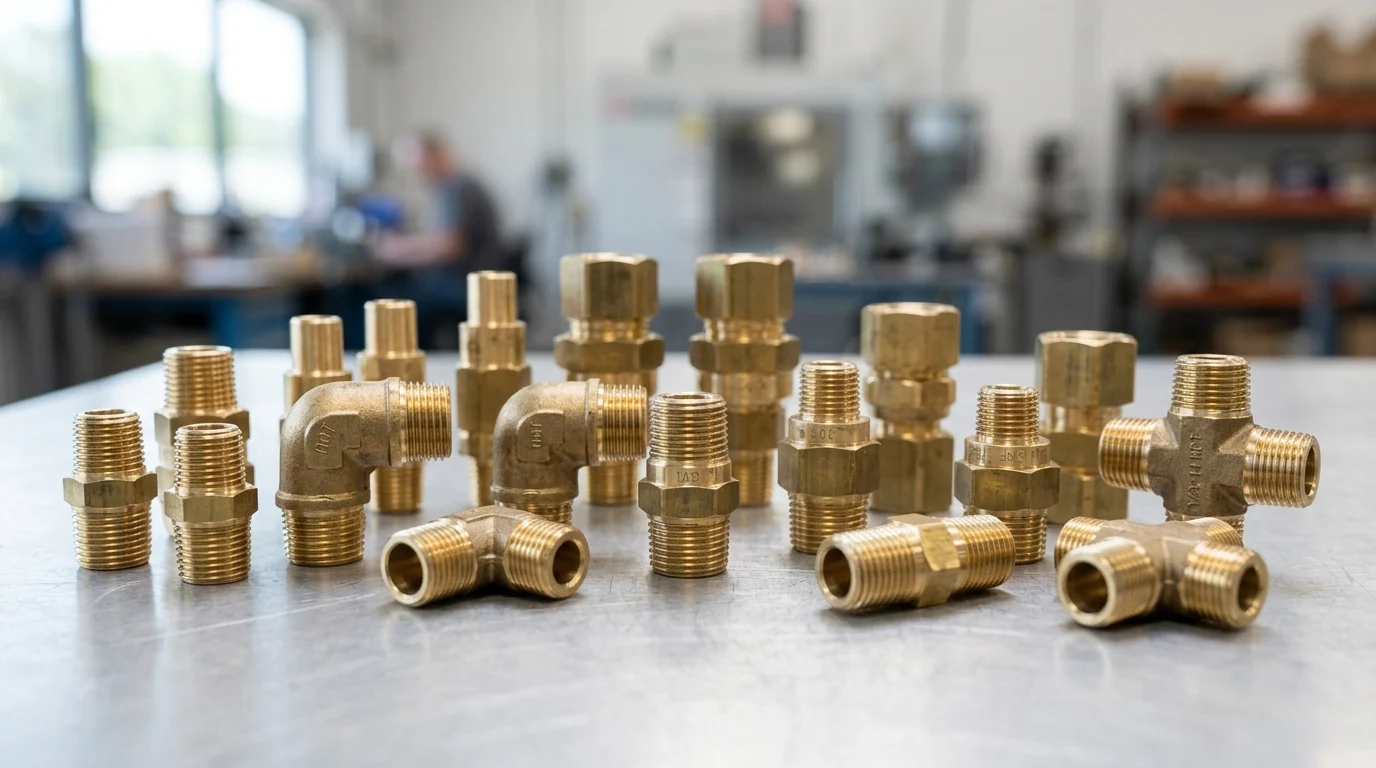
Introduction
A low unit price on DOT air brake fittings can hide expensive risks that only surface in the field: leaks, premature failures, compliance issues, and disrupted production. For buyers sourcing from a DOT air brake fittings manufacturer, the real question is not just cost, but whether the supplier is maintaining material quality, dimensional consistency, testing discipline, and traceable process control. This article outlines five practical warning signs that a supplier may be quietly reducing standards to protect margins, helping procurement and engineering teams spot trouble earlier, compare vendors more effectively, and avoid false savings that raise total lifecycle cost.
Why the Right DOT Air Brake Fittings Manufacturer Matters
Procuring pneumatic components for commercial vehicles demands rigorous oversight, as these parts are integral to the safe operation of heavy-duty braking systems. A reliable DOT air brake fittings manufacturer
w.nhpc-pneumatic.com/dot-90-male-non-swivel-elbow-push-lock-air-brake-fitting/) manufacturer does more than simply machine brass; they act as a critical safeguard against catastrophic mechanical failures, regulatory penalties, and supply chain disruptions. In an increasingly fragmented global market, buyers are frequently targeted by opportunistic vendors promising aggressive cost reductions. However, these savings are often achieved through imperceptible compromises in material integrity, dimensional tolerances, and quality assurance testing.
The Federal Motor Vehicle Safety Standards (FMVSS) 106 mandate strict performance criteria for brake hoses and end fittings. When a manufacturer quietly cuts corners to maintain profit margins against inflation or raw material fluctuations, the buyer assumes the entirety of the downstream risk. Identifying a failing or deceptive supplier requires procurement and engineering teams to look beyond the initial quotation and scrutinize the hidden operational metrics that define true manufacturing capability.
Hidden Lifecycle Costs of Low-Quote Suppliers
The initial purchase price of a pneumatic connector represents only a fraction of its Total Cost of Ownership (TCO). Low-quote suppliers frequently achieve their pricing by utilizing recycled scrap brass with high porosity or by thinning the walls of the fitting bodies. While these components may pass a cursory visual inspection upon receipt, their structural deficiencies manifest under the relentless vibration and thermal cycling of commercial fleet operations.
Consider the mathematical reality of systemic component failure: a seemingly negligible $0.15 unit cost reduction on a bulk order of 10,000 fittings saves $1,500 upfront. However, if substandard machining leads to a failure rate of just 0.5%, the resulting 50 premature air leaks can precipitate cascading expenses. A single emergency roadside service call for a blown airline typically costs between $400 and $600, not accounting for the $150 to $200 per hour in lost freight revenue during downtime. Consequently, that $1,500 initial saving can easily translate into $25,000 of reactive maintenance costs within the first year of deployment, heavily punishing fleets and OEMs who prioritize piece-price over lifecycle durability.
Buyer Risks from Poor Supplier Selection
Beyond direct financial losses, partnering with a substandard manufacturer introduces severe liability and regulatory risks. In the commercial vehicle sector, traceability and accountability are legally mandated. If a supplier utilizes unverified offshore subcontractors or alters their manufacturing process without notifying the buyer, the resulting components may lose their DOT compliance status, rendering the entire vehicle assembly legally unfit for highway operation.
Buyers face immense exposure during Department of Transportation audits or post-accident investigations. If a fleet is found operating with non-compliant pneumatic systems, DOT fines can exceed $5,000 per violation, and the vehicles can be immediately placed out of service. Furthermore, an OEM utilizing out-of-spec components risks forced product recalls. A reliable manufacturer maintains strict defect limits—often targeting below 50 Parts Per Million (PPM)—whereas corner-cutting suppliers frequently mask defect rates exceeding 500 PPM by blending bad batches with good ones, directly transferring the liability to the purchaser's brand.
How to Verify Technical Compliance and Quality
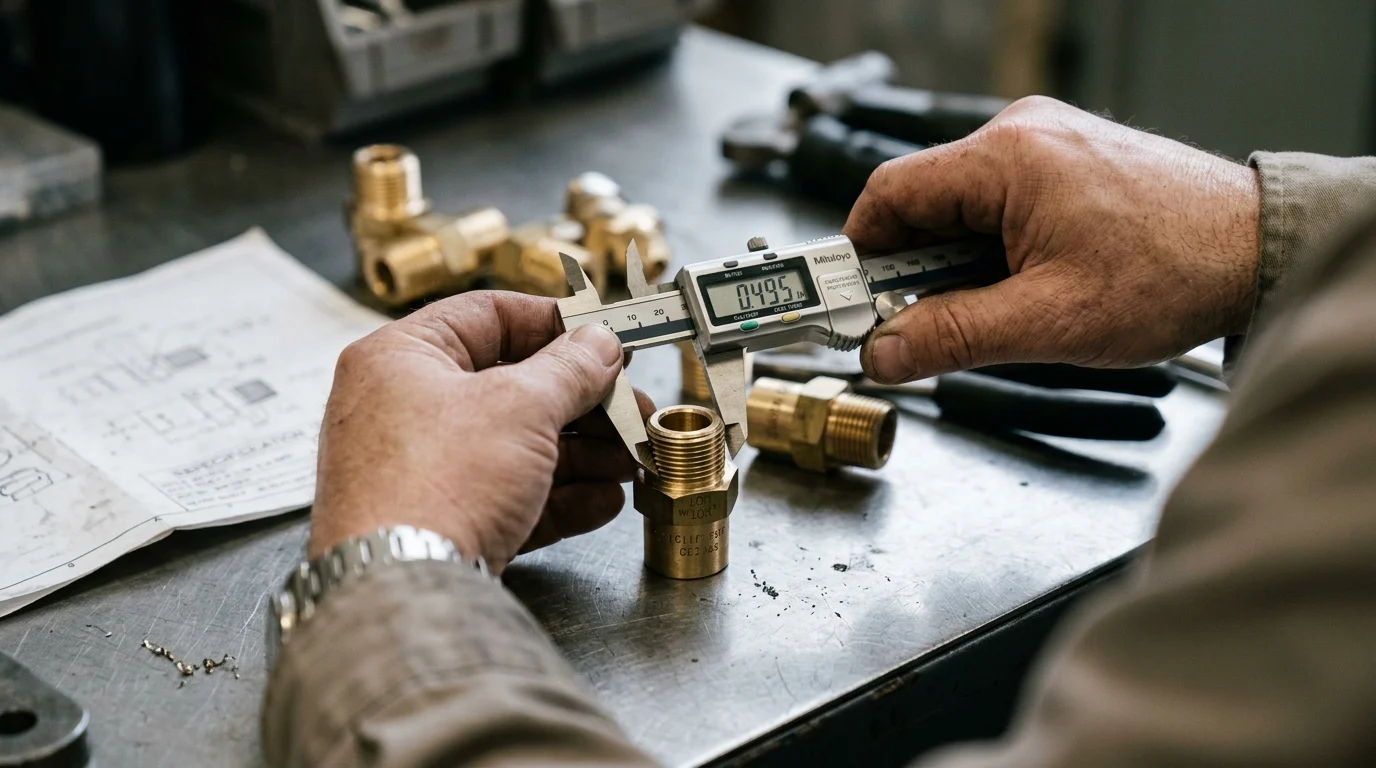
Regulatory adherence in the commercial vehicle sector is a binary state: a component is either fully compliant and verifiable, or it is a liability. Verifying technical compliance requires shifting the procurement focus from vendor promises to empirical data. High-tier manufacturers operate with complete transparency regarding their metallurgical sourcing, machining tolerances, and internal testing protocols.
How to Check Specifications and Material Standards
The foundation of any reliable pneumatic connector lies in its metallurgical composition. DOT-compliant fittings must be manufactured from specific brass alloys—typically CA360 for extruded bar stock and CA377 for forged bodies. These alloys provide the necessary tensile strength and corrosion resistance required for harsh highway environments. Corner-cutting suppliers often substitute these standard alloys with cheaper, lead-heavy, or high-zinc scrap materials, which are highly susceptible to dezincification and stress corrosion cracking.
To verify material standards, buyers must demand Certified Material Test Reports (CMTRs) directly from the raw material mill, not just a generic certificate from the fitting manufacturer. Additionally, dimensional tolerances must align with SAE J2494 specifications, which dictate the exact geometry required for secure tube retention and seal integrity. Procuring authentic Brass DOT Air Brake Line Fittings ensures that the threading, whether NPTF or metric, is cut to exact specifications to prevent thread galling and micro-leaks.
| Material Standard | Typical Application | Yield Strength (PSI) | Risk of Corner-Cutting |
|---|---|---|---|
| CA360 Brass | straight bodies, nuts | 45,000 | Substitution with high-porosity recycled scrap |
| CA377 Brass | Forged elbows, tees | 25,000 | Inadequate heat treatment leading to brittleness |
| EPDM O-Rings | Internal air seals | N/A | Substitution with standard NBR (fails at extreme temps) |
| Non-Spec Brass | Counterfeit fittings | < 20,000 | Dezincification, cracking under 120+ PSI pressure |
Required Documentation and Certification
A reputable manufacturer must provide comprehensive, traceable documentation that proves their operational maturity. This begins with an active ISO 9001:2015 or IATF 16949 certification, which guarantees that their quality management system is regularly audited by an independent third party. However, ISO certification alone does not guarantee product-level DOT compliance.
Suppliers must explicitly demonstrate adherence to FMVSS 106 and SAE standards. This includes providing the DOT registration number or the specific manufacturer identification mark that will be permanently stamped or forged into every fitting. If a supplier hesitates to provide this documentation, or if the certificates provided are expired, registered to a different company name, or lack a clear scope of accreditation for pneumatic components, it is a definitive sign of a compromised supply chain.
How to Review Testing Claims and Sample Approvals
Validation requires more than a visual inspection; it demands rigorous physical testing. FMVSS 106 outlines specific performance criteria that all air brake fittings must meet, including burst strength, tensile pull, and extreme temperature cycling. Buyers should request recent testing logs or commission independent laboratory tests during the qualification phase.
A standard nylon tubing connection must withstand a minimum burst pressure of 1,200 PSI, significantly higher than the 120 to 150 PSI standard operating pressure of a commercial truck air system. Furthermore, the fitting must pass a tensile pull test requiring a minimum of 150 pounds of force without the tube separating from the collet. If a supplier provides sample approvals based solely on dimensional checks without accompanying destructive testing data, they are bypassing critical safety validations.
Commercial and Logistics Warning Signs
While technical specifications dictate physical product performance, commercial behaviors dictate supply chain resilience. A supplier's logistical operations and pricing strategies often reveal internal distress or deceptive practices long before product defects reach the assembly line. Procurement teams must remain vigilant for subtle shifts in commercial terms, as these are frequently the earliest warning signs of a deteriorating manufacturer relationship.
Lead Time Instability and Product Substitutions
Consistent delivery schedules are paramount for maintaining lean manufacturing operations and preventing stockouts. A reliable offshore supplier typically operates with standard production lead times of 45 to 60 days for containerized shipments. When lead times begin to fluctuate wildly—creeping from 45 days to 90 or 120 days without a clear macroeconomic justification—it indicates that the supplier is either struggling to secure raw materials on credit or deprioritizing your orders in favor of higher-margin clients.
Equally concerning is the practice of unauthorized product substitutions. To meet delayed shipment deadlines, a corner-cutting vendor might quietly swap a specified EPDM internal O-ring for a cheaper Nitrile (Buna-N) variant, or substitute a forged body with a machined cast body. These substitutions fundamentally alter the component's performance characteristics, particularly its cold-weather resilience, and completely void the buyer's compliance framework.
Packaging, Labeling, and Inventory Control
The journey from the manufacturing floor to the assembly line introduces numerous opportunities for component degradation. High-quality DOT fittings rely on pristine thread conditions and internal cleanliness to function correctly. If a supplier begins cutting costs on packaging—transitioning from compartmentalized blister packs or heavy-duty corrugated boxes to bulk-dumping 1,000 fittings into a thin polybag—the resulting metal-on-metal impact during transit will cause severe thread damage and micro-dents on sealing surfaces.
Furthermore, inventory control and labeling are strictly regulated. DOT compliance requires specific lot traceability down to the individual bag or box. If inbound shipments arrive with missing lot codes, generic labeling, or inconsistent barcode formatting, it severely hampers the buyer's ability to execute a targeted recall in the event of a localized manufacturing defect, exposing the entire inventory to quarantine.
Pricing Structure, MOQ, and Channel Behavior
Anomalies in commercial proposals often serve as the earliest indicators of compromised quality. While competitive bidding is standard practice, extreme deviations from market index pricing for raw brass should trigger immediate audits. If the global commodity price of copper and zinc is rising, yet a supplier offers a sudden 15% price reduction, they are almost certainly reducing the wall thickness of the fitting or substituting inferior alloys.
Similarly, erratic Minimum Order Quantity (MOQ) behavior is a red flag. If a vendor suddenly increases the MOQ from a standard 2,500 pieces to an inflexible 25,000 pieces, they may be attempting to offload a defective production run or mask their own cash flow insolvency. Conversely, aggressive discounting on highly engineered components, such as a DOT 90° Male Non-Swivel fitting, often points to a simplified, non-compliant internal gripping mechanism being passed off as a premium push-to-connect design.
How to Compare and Approve Suppliers
Transitioning from incumbent vendors to new manufacturing partners necessitates a highly structured evaluation methodology. Relying on intuition or isolated price comparisons inevitably leads to supply chain vulnerabilities. Best-in-class organizations deploy standardized audit frameworks to objectively measure a supplier's capability, capacity, and commitment to continuous improvement before awarding any high-volume contracts.
Key Criteria for Supplier Comparison
Establishing a standardized evaluation framework ensures objective comparisons across multiple global vendors. This matrix must weight criteria based on risk mitigation rather than just unit cost. Key evaluation pillars include Quality Assurance capabilities, Manufacturing Capacity, Engineering Support, and Financial Stability. A supplier offering the lowest price but scoring poorly on engineering support will inevitably cause costly delays during new product introductions.
| Evaluation Criteria | Weight | High-Performing Supplier Indicator | Red Flag Indicator |
|---|---|---|---|
| Quality Systems | 35% | IATF 16949 certified, in-house burst testing | Expired ISO certs, relies entirely on 3rd party testing |
| Technical Capability | 25% | Automated CNC multi-axis machining | Manual lathes, high variance in batch tolerances |
| Cost Competitiveness | 20% | Transparent pricing tied to brass index | Fixed low pricing despite rising commodity costs |
| Logistics & Delivery | 20% | 98%+ On-Time Delivery (OTD) track record | Fluctuating lead times, poor packaging standards |
Audit Steps and Sample Validation
The First Article Inspection (FAI) serves as the critical gateway between prototype approval and mass production. Buyers must demand a comprehensive FAI report accompanying a statistically significant sample size—typically 30 to 50 pieces from the initial production tool, not hand-machined prototypes. These samples must undergo rigorous dimensional and functional validation.
Crucial checks include verifying thread engagement parameters. For instance, NPTF (National Pipe Taper Fuel) threads require precise L1 and L3 ring and plug gauge measurements, demanding a strict tolerance of +/- 1 turn to ensure a dry-seal fit without the need for excessive Teflon tape. Additionally, push-to-connect collets must be tested for insertion force (which should be low enough for ergonomic assembly) and retention force (which must exceed DOT minimums). Any deviation in the FAI stage is a hard stop; if a supplier cannot control quality on a 50-piece sample, they will catastrophically fail on a 50,000-piece production run.
How Teams Should Align on Approval
Supplier approval must never exist in a procurement vacuum. A unilateral decision made solely by a purchasing manager focused on cost savings frequently alienates engineering and quality assurance teams who must deal with the downstream fallout of inferior parts. Approval must be a cross-functional consensus.
Engineering must sign off on the material certs and dimensional tolerances. Quality Assurance must validate the supplier's Corrective and Preventive Action (CAPA) processes and audit their testing equipment calibration records. Procurement ensures the commercial terms, MOQs, and lead times align with production forecasts. Only when all three departments align on a vendor's risk profile should a supplier be elevated to an 'Approved' status in the enterprise resource planning (ERP) system.
A Practical Decision Framework for Buyers
Establishing a resilient supply chain for critical pneumatic components requires continuous vigilance. The landscape of industrial manufacturing is fluid; a supplier that executed flawlessly two years ago may currently be experiencing internal turnover, financial strain, or equipment degradation. Buyers must implement a dynamic procurement strategy that continuously balances risk against expenditure, ensuring that safety and compliance are never sacrificed at the altar of cost reduction.
How to Balance Price, Compliance, and Service
Procurement professionals face the constant challenge of optimizing spend without introducing systemic risk. This requires calculating the Risk-Adjusted Cost of a component rather than simply looking at the invoice price. When evaluating quotes for DOT fittings, buyers should mathematically penalize suppliers who exhibit any of the commercial or technical warning signs discussed.
For example, applying a 12% to 15% risk premium to a quote from an unverified offshore vendor accounts for the statistical likelihood of increased incoming inspection costs, higher defect rates, and potential warranty claims. When this risk premium is applied, domestic or highly verified international suppliers who initially appeared 10% more expensive frequently emerge as the most cost-effective solution over a five-year production cycle. Balancing this triangle of price, compliance, and service means prioritizing vendors who offer transparent index-based pricing, maintain automated optical inspection (AOI) on their production lines, and provide dedicated account management.
Immediate Next Steps for Distributors, OEMs, and Fleets
Organizations must translate supplier evaluation frameworks into immediate, actionable steps to protect their production lines. The first directive is to conduct a blind audit of current inventory. Pull random samples of high-volume air brake fittings from the warehouse floor and send them to an independent metallurgical lab to verify that the brass composition matches the supplier's submitted CMTRs. Discovering a discrepancy here allows a company to quarantine bad stock before it causes a highway failure.
Secondly, organizations must enforce a strict dual-sourcing mandate for their top 20% highest-volume SKUs. Relying on a single manufacturer for a critical air brake connector creates a single point of failure that can halt an entire OEM assembly line if that vendor experiences a localized disruption. By splitting volume between two fully vetted, DOT-compliant manufacturers—typically an 80/20 or 70/30 volume split—buyers maintain competitive pricing tension while guaranteeing a warm backup supply chain, completely neutralizing the leverage of a supplier attempting to quietly cut corners.
Key Takeaways
- The most important conclusions and rationale for DOT air brake fittings manufacturer
- Specs, compliance, and risk checks worth validating before you commit
- Practical next steps and caveats readers can apply immediately
Frequently Asked Questions
How can I verify a DOT air brake fittings manufacturer is truly compliant?
Ask for FMVSS 106 evidence, CMTRs from the raw material mill, and batch traceability records. If they only provide generic certificates, treat that as a warning sign.
What brass alloys should DOT air brake fittings use?
Common compliant choices are CA360 for bar stock and CA377 for forged bodies. Request the exact alloy on the CMTR to confirm material quality.
Why is the lowest quote often the most expensive option?
Cheap fittings can hide porous brass, thin walls, or poor machining. That raises leak, downtime, roadside repair, and recall costs far beyond the initial savings.
What defect rate should I expect from a reliable supplier?
Strong manufacturers often target below 50 PPM defects. If a supplier cannot share defect data or quality reports, their process may be unstable.
Which supplier behaviors suggest they are cutting corners?
Watch for missing test records, vague material sourcing, unapproved process changes, inconsistent dimensions, or refusal to share traceability. These issues increase compliance and fleet risk.